This is a follow on of sorts from my previous rant. I need to get straight in my head, and here, how I feel about how some families are treated by the services that should be providing support.
I expect many doctors, therapists and support workers would love all their patients, or clients, or whatever they are to them, to be ignorant sponges, with ignorant sponge children. Ignorant so we don't have the nous to question. Sponges so we soak up everything they say.
We are expected to trust in their expertise, safe in the knowledge that they know better than we do and we are safe in their hands.
In an ideal world, we are all a blank canvas, with the same potentials and the same ability to learn.
We do not live in an ideal world though. We are all different, some of us are more complex than others, some are more questioning. Some of us, for whatever reason, are not round pegs that fit neatly into the round holes provided by society. We are the awkward square pegs, trying desperately to round off our corners so we fit in, or trying to carve our own square holes.
We started our autism journey (sorry, that sounds so clichèd, but like so many clichès, it is a good description of what it is!) as ignorant sponges, not knowing what was happening, not questioning anything we were told. We thought we were good parents, but clearly we weren't good enough, or we wouldn't be experiencing the issues that were making life so very difficult, so we took advice on board and followed it for a long, long time, believing that things would get better if we followed the tried and tested strategies that were suggested to us. We made a valiant effort to make it work, but ultimately, the strategies we used would never have worked.
Over the course of the next couple of years, we started to question the things we were told. We quickly came to the realisation that the experts didn't always have the answers, which is fine, nobody has all the answers. But not just that. When we, the people who live with our children and are in a position where we have to learn quickly what works and what doesn't, come up with possible answers, it is very, very difficult to be taken seriously.
In my experience, there are two types of expert (when using expert, I mean anyone in a position that means they are working with the child or their family, so it may be a teacher, a support worker or paediatrician).
The first is the kind who welcomes parental input, someone who believes what we are saying and tries their hardest to understand. They are open to our suggestions and input. They are happy to work with us.
We are lucky enough to have a GP that falls into this category. Without her support and understanding over the last few years, we would not be in the position we are in now, confident of how we handle things.
The second kind tend to be a little more rigid with their approach. There is often an assumption that parents are causing their child's difficulties, which no doubt some do, but when faced with a more complex child, who does not respond to a one-size-fits-all approach, or who presents in a way that is unusual or unexpected, rather than thinking outside the box, or involving parents who all too often have found the answers, there is a tendency to obfuscate the issue and twist facts to fit within the narrow criteria of the manuals that they work by.
This is damaging, as many of us have learnt, not many children or adults, even those apparently with no issues, fit the instruction book. There are more usual behaviours which are easy to identify. But there are the unusual as well.
There's a saying in the medical world: When you hear hoofbeats, think horses, not zebras.
Basically, look for the simplest explanation. If it looks like a cold, chances are it's a cold.
When it comes to PDA and autism, when it doesn't present typically, this is currently a problem.
In many cases, PDA is the obvious answer. PDA is the horse, not the zebra.
But because the manuals don't currently include PDA as a valid diagnosis, many experts will ignore it as a possible explanation and go around many convoluted avenues to prove that the behaviours are caused by attachment problems, or poor parenting.
As part of the investigations, parents are expected to complete parenting courses, allow strangers into their houses to observe the child and how they interact within the family.
As I explained previously, our experiences of both of these did not go well.
Whilst the Webster-Stratton does focus on communication problems, the videos that featured heavily during the course showed, on the whole, parents disinterested in their children, parents having to be taught to let their child lead, to spend time with their child rather than disengage. Parents who have to be shown how to have a relationship with their child.
Whilst our son can be very difficult to be with, we have a very good relationship with him, we enjoy his company, we encourage his many talents, we interact with him in a way that suits him, we respect him. To use another clichè, we know what makes him tick. We know his strengths, we also know his weaknesses and triggers and work hard with him to overcome these.
During his assessment period though, all this was overlooked. The assumption that we were just another dysfunctional family made the whole process very traumatic, and has left us with a distrust and unease around the very people who I believe we should have a good working relationship with. Unfortunately, we are not alone in this approach. I know many families who were treated in this way until the point where the child was diagnosed, and beyond.
The parenting course was another example of our knowledge being completely disregarded. We were clear that it was making things worse, but we were not allowed autonomy over our own family circumstances without being seen as obstructive to our son's care, even though following through with the course was clearly not the right thing for our son. We quietly backed out, naïvely hoping for no ramifications. We backed out to use the strategies that work well with our son, as we had explained to anyone who sat still long enough to listen to us.
Using our autonomy and refusing prevention support (for reasons I spoke about in the last blog post) was also seen as obstructive, even though we know beyond shadow of a doubt that this particular intervention will have no positive consequences for our family. We know that because throughout the assessment process, we had people visiting us at home, with the sole intention of building up a relationship with PDA boy so they could see what we see, but they couldn't see him, no-one sees the real boy as he is so very aware of having to fit in. Even his grandparents can't see the full extent of his behaviour, although they are learning to recognise some of his subtle tells.
As I spoke about in my first post, some children mask extremely well, something which most experts cannot (or will not) recognise. This is massively to the detriment of the child and his or her family, and it is these families that are often assumed to be fabricating their child's difficulties, or exaggerating the violence and stress we live with, because the child does not fit the expectations of the experts.
There are some experts who recognise this. Notably for me is Dr Luke Beardon, whose blog posts have been printed and shared by many parents (myself included) trying desperately to be listened to and taken seriously.
I am hoping for a shift towards more experts like this, within the NHS so they are accessible to all who need them. The number of experts are there, so this shouldn't be a funding issue, what is needed is a change of attitude amongst those working with families like ours.
In this resource limited time we live in, lack of funds is the most used reason I've heard for the way families like mine are treated. But I have a sneaky feeling that the cost to society is far, far greater by forcing families to jump through unnatural, manufactured hoops in order to qualify for support. The cost of putting countless families through parenting courses that many parents know full well won't help must limit the real help that can be given.
I was often asked what we wanted from CAMHS. Put on the spot like that, I found it incredibly difficult to come up with an answer.
I have one now though.
I wanted them to acknowledge that we know how to handle our son.
I wanted them to acknowledge PDA in a more helpful way than "Well, it's not in the books".
I wanted them to believe us.
I wanted clear cut advice as to what to do when my son threatens to kill himself, and demonstrates how.
I wanted to know they were there, standing shoulder to shoulder with us at a time when we needed it, in a way that I know they can with clearer cases.
From an organisation whose sole purpose is to lend expertise to our troubled children, I don't think this is too much to ask.
Wednesday, 25 May 2016

Tuesday, 26 April 2016
Beautiful skies; a love story.

Can I start this with an apology; it wasn't my intention to write a "Me Me Me" post at all, but after a few attempts to write a less personalised post, I lost everything I wanted to say.
I want to get across how important special interests are, but I can't possibly write about others' interests and do them justice.
The sky is my passion. I have other interests, but for the last few years, the sky in different manifestations has been the main one. Stars, birds of prey and now clouds. All of which have led to other interests.
I'll start with stars. As a child we lived in a beautiful house in the middle of countryside. I would spend hours looking at stars, without really knowing what I was looking for, just enjoying picking out familiar patterns, looking forward to winter when Orion would be in our skies once more, using The Plough to find the North Star, enjoying the sensation of being outside and all dark and quiet.

More recently, my love of stars has led me to discover Messier objects - a list of 110 objects in the sky that are not comets. There are galaxies (I find it mind blowing that it's possible to see other galaxies in our universe!), nebulae, star clusters and more.
In turn this has led to a fascination in telescopes and how they work, and bemusement at some of the logical names of some of the largest telescopes in the world - VLT = Very Large Telescope, ELT = Extremely Large Telescope.
Clouds have been a slow burning interest. I didn't realise how intense an interest it was until I saw that my cloud photo collection was standing at over 700 photos, and these are the ones special enough to have made the final cut. I estimate that, including the ones that didn't make the grade, I must have taken and studied nearly 3,000 photos.

The thing that separates out a special interest from any other interests is the intensity, and how it makes me feel.
When there's a beautiful sunset, driving up to the moors with my camera, my infernal, internal dialogue is switched off, i can utterly focus on the changing sky, and the images I wish to capture. I become me.

With my special interest I leave my dull, brown chrysalis, and become something with endless potential, the world is my oyster. I can be anything and anyone I want to be. I feel enthusiastic, excited about the future. I am energised. I can feel something inside me desperately trying to break out.
Seeing beautiful skies outside and not being able to get to them upsets me, I feel trapped and frustrated. I feel irritable and unable to settle to anything.
My interests make me a better person. If only I could make a living out of pootling around the countryside taking photos of lovely clouds!
When we were going through the assessment process with my 10 year old, I was told a few times that I must limit how much time he spent on his interests. I have no idea to what purpose, but on the face of it, I believe it was to make him more NT. I'm so pleased I listened to my own instincts about this and ignored them.
When he was seven, my son went on a school trip to a zoo. After a talk by the zoo's vet, the children were asked questions about the animals. My son amazed his teachers that day. My little boy, slightly below average academically, had self taught himself about reptiles, amphibians and birds and knew enough about them to impress the vet.
Another day at school, he told his teachers that we had a pet barn owl. Through his own independent research, he knew more than the average adult knows about birds of prey. He was also lying through his teeth. We do not, and never have had, a barn owl. But such was his interest, he'd built up a whole fantasy land where we did have an owl.
Our calmest times are when he is immersed in an interest. There's no way I'm going to limit these times, especially not since these are the times when we can see potential genius in our son.
Now, when something takes his interest, we are very careful to let it develop, and put things in place to help this development.
Many autistic people find themselves when they follow their special interests, whether they are scientists, actors, artists or IT specialists, by following their interests, the world is a better place for all of us because they have been allowed to follow their passions.

Sunday, 24 April 2016
God gives special children to special people? Really?

I'm sure we've all seen or heard something like this at some point, whether we agree with the sentiment or not.
Seeing this phrase as a meme on Facebook has brought me to tears and at other times given me the rage.
Being the parent of children with ASD is a mixed bag. At least it is for me.
I always have doubts about my parenting and read others' glowing successful accounts of parenting their children with a mix of awe (how do they come across so calm and at peace with their lives?) and doubt (no way is anyone this perfect at parenting all the time).
I'm hopeful that the majority of parents experience parenting like I do. Either that or I am truly terrible at it!
Most of the time I manage to get through life in a vaguely going-in-the-right-direction winging it sort of way. I can look back on a day and think about the things I could have done better, and reflect on the things that went well. The day wasn't perfect, but we got through it ok.
Some days I am amazing (if I do say it myself). Everything I do works, I remain calm through meltdowns, I manage to lead my fighting family away from their differences and either bring them together peacefully or separate them successfully. On these days, I look back serenely congratulating myself, thinking "That's it! I've cracked it!".
Admittedly these days are rare. Having children who barely tolerate each other at the best of times, and whose conflicting needs mean that when one child's needs are met, the other's are neglected, a good day is one where we've got through without too many meltdowns or punch-ups of some sort.
Then we get to the bad days. The days where no matter what is done, it's wrong and escalates every situation we encounter. The days where no amount of strategies (that are usually helpful) make any difference. The sort of days where at some point I will know beyond any shadow of a doubt that I cannot keep doing this, that I would rather leave and live in a tent (with wifi) than have to face this ever again.
Thankfully these days don't happen too often, and when they do happen, it's usually because we are all simultaneously having a bad day which individually can be dealt with effectively.
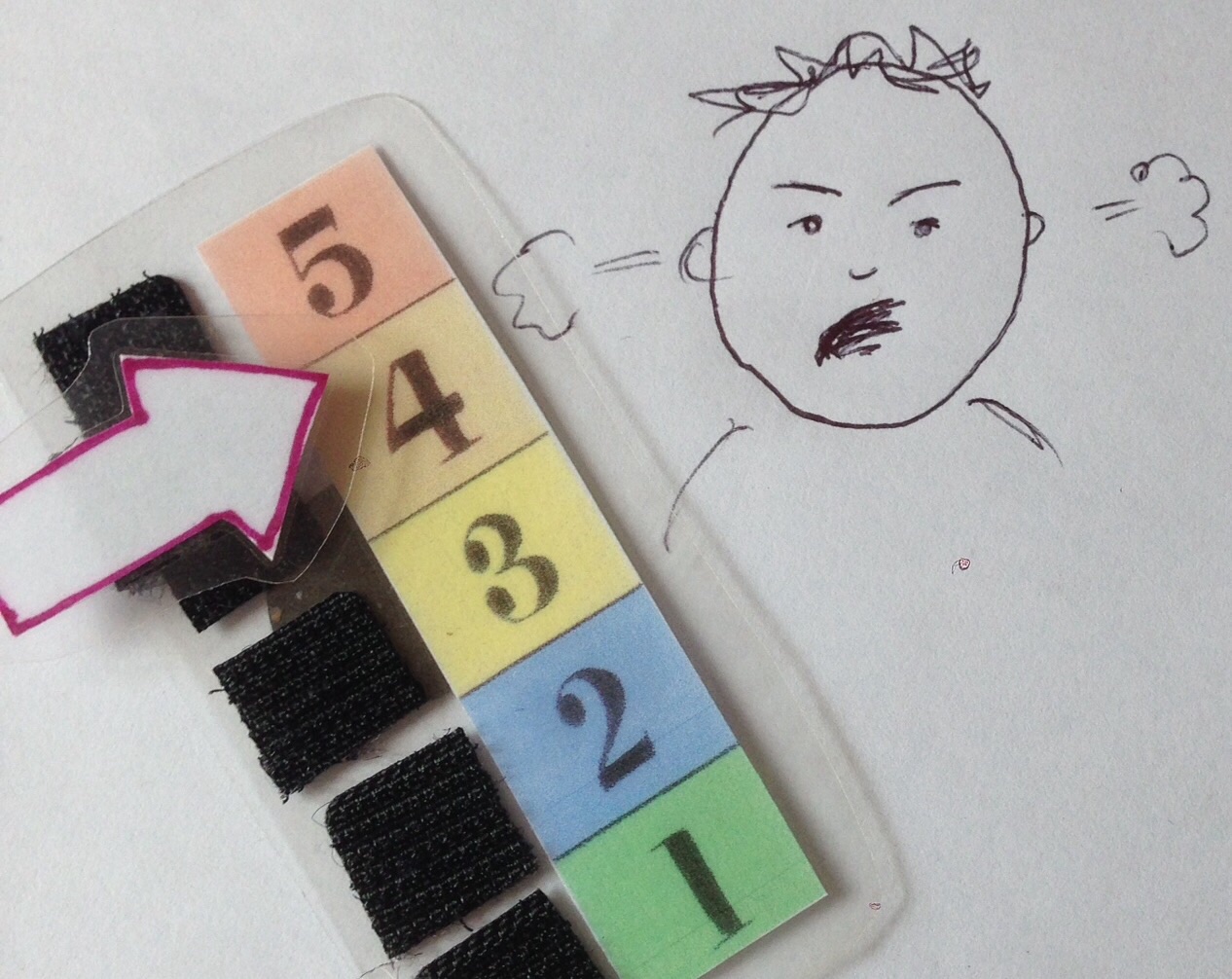
I recognise that for my oldest, when he is anxious about something, usually change, he will be obnoxious and controlling.
For my 10 year old, when he's anxious, he tends to be violent and extremely control driven, to the point where he cannot cope with even little everyday demands (hence his PDA diagnosis).
For my youngest, when things aren't right in his world, he will whinge and cry incessantly.
And me, those days where any noise is too much, any contact is the most irritating thing in the world, and I feel a strong need to be completely alone and silent.
Usually, it will be a bad day for one or two of us, we seem to take it in turns. We can cope with one or two bad days in the family.
When these things happen together though, we will have a Very Bad Day™.
These are the days when "God gives special children to special parents" upsets me.
I am not special.
Through genetics, I am who I am, I have the children I have, and I love them dearly. I wouldn't change them for the world.
But some days I fail, some days my actions inadvertently make things worse. Some days (dare I admit this?) it's all too hard, and I struggle to see how it's worth it. I can't see the little improvements that I usually can, all I can see is the hard slog ahead and can't help but think I am the wrong person to be doing this.
And on days like this, reading "God gives special children to special parents" is the last thing I need, because if that's the case, in this family, God got it wrong. These are the days I seriously doubt my ability to raise my family to be be caring, thoughtful adults.
Luckily, like I said, these days are rare. We can wake up the next morning and life feels more settled, we can cope. We can then see that there are plenty of positives, progress is made, life is good.
I still don't think we are special though.
I believe that we have the family we have, and we cope with things because this is our normal, this is what life is like on a daily basis, having to watch out for subtle signs, dealing with behaviour that some parents will never encounter in a lifetime of parenting.
You can't possibly live life in a constant state of shock at the violence we experience at the hands of our ten year old, all we can do is learn strategies that help him to feel more comfortable, which hopefully lessens the violence. We manage because we have to, not because we are some sort of superior being, sent to earth to give birth to our children and prove how special we are.
We do what any other decent parent of any child does, we adapt to give our children the best lives they can possibly have.
I'm sure having bad days is a normal part of parenting (at least, I hope so!), and perhaps it's important to have these epic shitty days so that we can look back on them gratefully that most days are ok.
Saturday, 16 April 2016
Find your People.
Last week we visited a friend. (The same friend who introduced me to "You can't educate pork")
I've found these people in real life and on the Internet.
And life is better for having them there.
Even though I've never met most of them, and probably never will, they are still there, going through the same things with their children, having the same struggles that I have, understanding and never judging. They may not know it, Hell, they don't even know me, but they are incredibly important to me and are a big part in my life and how I feel about my family and myself.
I'm sure anyone reading this, a blog predominantly about autism and PDA, will be some way to being with their people, and will be amongst someone else's people.
Not only are you important to your families, you are also important to people like me, faceless strangers on the Internet, doing our best to live under tricky circumstances, doing our best to navigate largely inefficient services. You are there on the days when a quick "I get it, you're doing fine" means the World.
Thank you.
Visiting this friend is very easy. For ease of writing, let's call her M. M is one of those rare people who you can be yourself with.
Even my 10 year old boy with PDA loves to visit M, which is something of a rarity as he mostly dislikes any social meet up unless it is strictly on his terms (she also keeps donkeys, which helps).
Before social interactions it is important to have some time to build up to the visit.
I don't know about others' methods of preparation, but mine usually follow a pattern of avoidance, intense planning and anxiety.
Avoidance of other commitments to allow enough energy to focus on and enjoy the planned interaction, or if it's a Dr's appointment, to be able to communicate the reason for the visit and still have energy left over to take in what the Dr says back to me. Ideally for me, one or two social visits or appointments a week is the limit, and means that I can still function adequately enough to be nice to my children! Too much, and housework and parenting slips and I spend a disproportionate amount of time with earplugs in, ignoring everyone.
Intense planning of conversations, remembering anything that was said last time, things I shouldn't have said, how to get certain important points across, going through bizarre scenarios which, with the rationale of hindsight, I know will never happen, but feel of utmost importance to think about so I know what to say and how to react if it does happen (it never happens). I also make a mental note of the weather and major news events or local happenings, which generally means I'm prepared for any small talk, although if a topic is brought up that I haven't prepared for, or, heaven forbid, someone tries to be jokey, I will be thrown and have to work very hard to take in what they've said, process it and say something relevant back, or I end up standing looking gormless.
Anxiety as a result of all the planning, of knowing that you may have let other people down by avoiding them, anxiety of driving to a new place (cue hours on Google maps and street view to memorise road numbers and imprint images and landmarks in the brain so the drive there feels familiar), anxiety of saying the wrong thing, anxiety of the things that could (but mostly don't) go wrong.
This is all before the visit has taken place. When it is over, there's another pattern of recovery, which can take anywhere between a few hours to a few days, depending on how taxing it was.
Again, I don't know if this is how it is for others, but for me, this is avoidance/solitude, intense post mortem, and anxiety.
Avoidance/solitude to allow my battery to recharge.
Intense post mortem, the time spent going over and over the things said, processing the visit and making sense of things that passed me by during the visit.
Anxiety as a result of fatigue, as a result from wondering about anything I may have said wrong, or shouldn't have said.
As you can see, it is hard work. It is exhausting.
Add into the mix parenting a child who has similar, if not more severe, issues, then you come to realise that everything that happens has an impact on the child, on you, and therefore on the whole family, and you need to understand the things that can help. For my family, being careful about the number of social activities we have, and allowing plenty of time before and after has been very helpful.
Add into the mix parenting a child who has similar, if not more severe, issues, then you come to realise that everything that happens has an impact on the child, on you, and therefore on the whole family, and you need to understand the things that can help. For my family, being careful about the number of social activities we have, and allowing plenty of time before and after has been very helpful.
And now I'll get to the point (there is one, I promise).
When I visit M and others like her, although there will still be the need to recover after a visit, I find that because I feel so comfortable with her, I can be more spontaneous. I can skip the intense planning stage, and the anxiety stage. Although a visit can still be tiring, at the same time it is comforting and rewarding. I can say stupid things and it doesn't matter. In a way, this makes me think of her almost as family. A visit to someone like M is well worth it.
Some people can be more difficult to be with, because there's always the risk that they just don't understand. This isn't their fault, but when you either need to act more to cover up your feelings, or you start to monologue to try to explain, or you simply think "You can't educate pork", it's a disappointing exchange, which then increases the anxiety and fatigue you are already suffering from through simply visiting them in the first place. Most of the services we have been involved with have been like this, which is doubly disappointing and anxiety inducing, because they are supposed to be the people trained to recognise the problems and work with the family to help improve things.
Some people can be more difficult to be with, because there's always the risk that they just don't understand. This isn't their fault, but when you either need to act more to cover up your feelings, or you start to monologue to try to explain, or you simply think "You can't educate pork", it's a disappointing exchange, which then increases the anxiety and fatigue you are already suffering from through simply visiting them in the first place. Most of the services we have been involved with have been like this, which is doubly disappointing and anxiety inducing, because they are supposed to be the people trained to recognise the problems and work with the family to help improve things.
I've come to realise how important it is to have people around you who understand you and your situation. People you never have to justify yourself to. People who won't judge you. People with whom you can be yourself, so that the social difficulties, and consequences of those difficulties, are fewer.
I've found these people in real life and on the Internet.
And life is better for having them there.
Even though I've never met most of them, and probably never will, they are still there, going through the same things with their children, having the same struggles that I have, understanding and never judging. They may not know it, Hell, they don't even know me, but they are incredibly important to me and are a big part in my life and how I feel about my family and myself.
I'm sure anyone reading this, a blog predominantly about autism and PDA, will be some way to being with their people, and will be amongst someone else's people.
Not only are you important to your families, you are also important to people like me, faceless strangers on the Internet, doing our best to live under tricky circumstances, doing our best to navigate largely inefficient services. You are there on the days when a quick "I get it, you're doing fine" means the World.
Thank you.
Monday, 4 April 2016
You can't educate pork.
This is a saying a friend taught me.
I had to ask what it meant, but now I know, it's a saying I use frequently, even if it's only to myself.
Basically, it means that some people are so set in their beliefs that you simply can't say anything that will alter their mindset.
This has become my mantra. All those irritating times when someone has an opinion that is hurtful, bigoted, ignorant or just plain wrong, instead of getting my knickers in a twist (to put it mildly), I repeat "you can't educate pork" in my mind, and it really helps.
Using an inanimate meat product as a comparison is insulting enough to jolt me into not caring what they say, and kept private so no-one is hurt or insulted (apart from me, by the comments made in the first place). At the very least, repeating it gives me time to accept that the person saying these things doesn't care enough about me or my family to educate themselves and realise that the things they are saying make them look like twats, so I don't need to waste my breath on them any more.
With people like this you can tell them how it actually is until you're blue in the face, but it won't make a jot of difference.
It is a particularly useful tool to keep handy when you have a child with autism. As any autism parent knows, thoughtless comments from others are par for the course.
I read the following exchange on a support group today, this is a fine example of where "you can't educate pork" comes in very handy:
Football Mum: Well L had a bit of a strop at training yesterday.
Me: Yes well, luckily the children understand the way he is and leave him to it until he's ready to re-join.
Football Mum: Well, I know he has Autism and everything, but don't you think most of it is down to being spoilt? My son knows not to behave like that because I have taught him well......
You see? You simply can't argue with that level of stupid. I have to admit, as I read this, my mind took over with a chorus of "you can't educate pork, you can't educate pork, you can't educate pork", and it worked, I didn't feel at all wound up about the exchange. And as I write, I can't help but hear Dorothy saying "There's no place like home, there's no place like home", but instead of being transported to a safe place, with Aunty Em in Kansas, I'm transported to my own safe place of "I don't care lalalalala", and I didn't even need a hot air balloon to get there!
Some other examples where YCEP has personally saved me from unnecessary anguish:
From the headteacher at school, who really should know better:
"But he's going to have to do as he's told, he lives in the real world...."
(Oh if only it were that simple! And as I pointed out to her in an email, would she expect a physically disabled child to get up and walk without support, because they live in the real world?)
The many many people who have said any or all of the following:
"He's just being a boy, they're all like that"
"Make him run, he doesn't do enough"
(About the boy who never stops)
"He doesn't have autism, he gives eye contact"
"He doesn't have autism, he's talking fine"
"Why should he have the benefit of having a scribe and extra time in exams, why can't my (non-autistic, no processing problems) child have the same? It should be a level playing field for all, this is unfair........"
(My words in brackets).
(This was a tricky one to ignore. The level of stupidity was high. Yes, my son with ASD, OCD, anxiety and poor processing skills really has a distinct advantage over yours because he qualified for some support <sarcasm>)
Also throw in a few "why shouldn't able children have 1:1 support in lessons", "why are you pandering to your child, you're just spoiling him", and many veiled (and not so veiled) comments about parenting, you can see why YCEP is so useful.
If we tried to educate every single person making these comments, we wouldn't have time to parent our own children. We have to pick our battles carefully, choosing the ones which we hope will get us somewhere. Battles with people that don't matter are a pointless waste of our energy.
So here, as a thank you for anyone who has read this blog (frankly I'm amazed!), I gift you the power of You Can't Educate Pork.
Use it wisely.
Sunday, 27 March 2016
Pressure of SATs.
The soundtrack of our evenings is undergoing a change.
Whilst we are no strangers to bedtime meltdowns, nights where bedtime = all possible anxieties, past and present, coming to the surface and preventing sleep, we are now seeing a new level of upset.
This last couple of weeks we are seeing melatonin refusal. He's pissed off, and that's how he wants to be. He doesn't want to get to sleep easily. He's raging......about SATs.
PDA boy is in year 6. And don't we know about it!
When we pick him up from school, it is immediately apparent that something is wrong, even though his facial expression will show happiness, his eyes tell a very different story.
Typically, as soon as he sits down in the car, the anger will come streaming out, occasionally with tears, but mostly just a cold, hard rage against all the injustices (and there are many) of the day.
This needs careful managing, frequent snacks and sensory activities to attempt to keep things calm and prevent a meltdown. A few hours hard work will usually mean that we have an hour of relative calm before his bedtime routine begins.
Sometimes we can distract him through to the point where he is in bed, with inventive use of games, distraction, subtle manipulation and a promise of a short YouTube video before it's time to settle.
At the moment, SATs rage is winning.
Every day at school, the fact (that no-one can possibly have missed!) that SATs will soon be upon year 6 is mentioned yet again. I'm not sure this drip-feed is necessary. It doesn't seem to serve any other purpose but to constantly top up the stress levels of the small group of ten and eleven year olds.
Add to this a SATs club every week, SATs booster books instead of homework, the message is already over egged.
For a neurotypical child this must be difficult.
For our child, this is intolerable, and given his PDA, the pressure is having a reverse effect. He is bright, and in a relaxed state when he is allowed to pursue his own interests, we sometimes wonder if our son has the potential to be a genius (of course no parental bias at all!).
In school though, he is struggling with the workload. He is enormously put out that some of the work the teacher is hastily preparing is work that in previous years was aimed at year 8 pupils.
At home, when he is in a rare relaxed mood, he knows all his times tables. In school however, he barely knows his 2, 5 and 10 times tables. He finds this frustrating and humiliating.
I believe this is a sure sign of his anxiety preventing him from working to his true potential, and banging on and on about SATs is not helping at all.
Bedtime has once more become a nightmare, our boy is begging us to kill him, he is kicking and headbutting walls, throwing things, punching.
His ability to swear at any opportunity is outstanding. What a pity he isn't being tested in this area rather than SPAG and times tables!
I do understand why SATs are necessary, but I most definitely do not understand the need for such a massive build up, and pressure for children to out-perform their potential.
If year 6 was treated as a normal school year my son would probably "perform" better. He would learn more.
I'm not sure what this government's overall aim is with regards to education, but I am pretty sure that with this child, it's not working.
Tuesday, 9 February 2016
To my son's teacher.....
I would like to inspire you.
You see my son as any other child, sometimes a bit rude, occasionally giddy, slightly academically behind, but on the whole you see a normal ten year old boy.
At home we see something different. Of course there is the violent, highly anxious side, but this isn't what I'm talking about.
I'm talking about the bright child capable of focusing intently on a subject that has taken his fancy, his outstanding capacity to learn facts. The funny boy who makes clever jokes with words.
We see a child with untapped potential.
I understand that during the school day, you don't see this. He doesn't show this side because he is afraid of ridicule from his peers, afraid of letting go and embarrassing himself or hurting someone. He heard the cruel comments from his friends whilst watching a Newsround clip about Sunderland AFC introducing a sensory room for their autistic fans, which was hurtful, but sent the clear message that he can never be himself in school.
I know that I have sent many letters explaining how you can help him, little things that require no costly training courses, no expense to school at all. I have sent those letters, but all that I'm getting back is that this is a problem. I am a problem.
I am that mother. The one you subtly roll your eyes at when you see me approaching you yet again.
The one whose emails you have stopped responding to (which is plain rude).
The one who is keen to help co-ordinate meetings between various agencies because the alternative is leaving it to people who forget all about it, or forget to liaise with a vital cog in the wheel, thus rendering the meeting pointless.
I am that mother that wants to attend all meetings concerning my son, who wants to make everything wrong in the world right for him (if only I had the energy...), the one who can see how little changes could make a world of difference.
But this isn't about me, I'm an old hag, my potential isn't at stake here. I don't really care if you hurt me, exclude me, decide I'm fabricating this whole autism thing.
This is about my son. This is about his potential being capped. His own glass ceiling is his inability to show you his amazing side, which comes hand in hand with what he calls his dark side, which he will not show to anyone outside of close family.
But you can make a difference, honestly you can. You can assume that everything I've told you is true, you can change your mindset and see the rudeness as him trying desperately to show you that he's not feeling good, you can see the giddiness as overload which, in the school environment, means his body doesn't always do as it's told. You can change your language ever so slightly so that he doesn't feel threatened.
Do remember the time he swore? Saying fuck in front of a supply teacher and several children was not a good move, but he can't remember it at all, he can't really recall anything of that day because his anxiety levels were so high. He can remember feeling numb and faint when he was shouted at, and having all his breaks for the week removed. He can't remember the massive meltdown he had that night (the one when he made a hole in his bedroom door) and the next morning and several nights following, at his perceived injustice at being punished.
He was crying out for help at that point, and if you'd read anything I sent you, you would understand this.
So now, instead of begging you yet again, I'm going to take a different approach.
Let's fast forward ten, fifteen years or more. My son could be the next David Attenborough, or the wealthy creator of a new computer game, he could even be a singer or actor, he has so many talents.
I would like you to be able to look back to those few years you taught him and feel proud that you were a part of his formative years, giving him the gift of a future.
Actually, when I think about it, even if his chosen career path sees him stacking shelves in a supermarket, I'd like you to be proud that the understanding you showed him has helped him to be a happy, productive adult, no matter what he's doing.
The future is shaky enough for our children with autism. School can be a place where a bit of understanding can go a hell of a long way.
You don't need to see his amazing or dark side to know that it's there. The trouble is, when no understanding is shown, my boy's dark side wins out, through terrifying meltdowns and suicidal behaviour. When he feels understood, it gives him the space to be amazing.
Let him be amazing.
Subscribe to:
Posts (Atom)